The Teabag Post-Mortem: What’s Really Left After the Kettle Boils
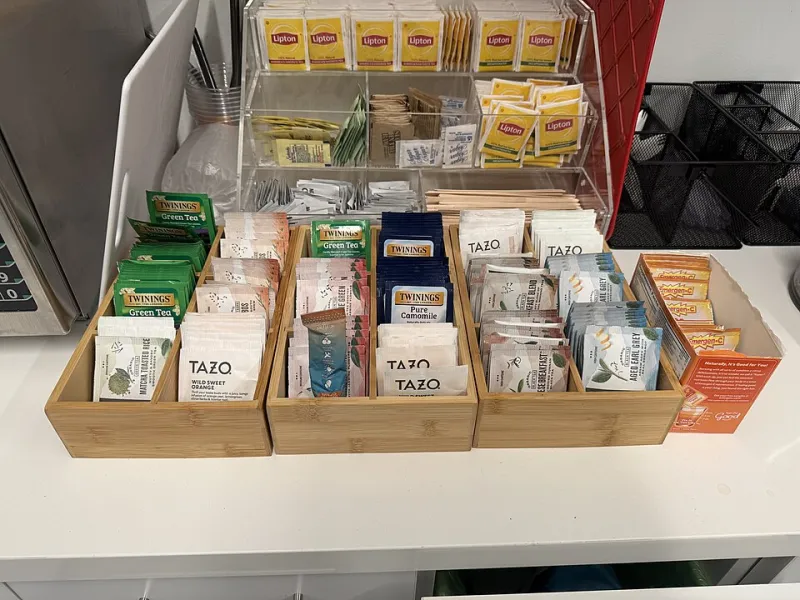
Photo: Yelderberry (talk), CC BY-SA 4.0, via Wikimedia Commons
Tea is the one UK household routine that survives every budget, every weather forecast and every minor crisis. It is also the one that quietly fills the caddy with something most of us never inspect: the bag itself. For years the question was simple — paper or plastic? Now the shelf is crowded with plant-based, plastic-free, biodegradable and compostable claims, and the bin is expected to sort out the difference. It can’t.
Start with the bag, not the brew
The tea leaves inside almost any bag are compostable. They are leaves. The awkward bit is everything holding them together: the paper, the seam, the staple, the string, the tag and — in pyramid bags — the mesh. A tea bag is a small piece of packaging that has been designed to sit in boiling water without falling apart. That is precisely why it does not always fall apart in a caddy.
The first useful distinction is between bag styles. A standard square or round bag is usually paper-based, with a folded seam. Some are stapled; many are heat-sealed. A pyramid bag is often a silky mesh, which may be plant-based polylactic acid (PLA) or nylon. Those are very different materials with very different end-of-life stories. A string and tag adds another component, usually paper but sometimes glued or attached with a small plastic staple.
The label is not a bin instruction
‘Plastic-free’ is a good start, but it is not a standard. It usually means the bag and seal contain no polypropylene, the plastic historically used to heat-seal tea bags. That is welcome. It does not automatically mean the bag will break down in your home compost heap.
‘Compostable’ is the phrase that causes the most confusion. A bag can be certified to EN 13432, which means it breaks down in industrial composting conditions. That is not the same as a home compost bin, which rarely gets hot enough or consistently active enough for some plant-based plastics. If you want to compost at home, look for a home compostable certification such as TÜV OK compost HOME. If the box just says ‘compostable’ with no standard, treat it as a question mark rather than a promise.
‘Biodegradable’ is even vaguer. Everything biodegrades eventually, including plastic, given enough time and the right conditions. The word tells you nothing about how long it takes or what it leaves behind. ‘Plant-based’ is similarly descriptive rather than definitive: a plant-based seal may still need industrial composting.
What actually happens in a caddy
A kitchen caddy is not a compost heap. It is a holding bin. The bag has to survive the trip to wherever the real processing happens, whether that is your garden heap or the council’s food waste lorry. In a home compost bin, paper bags with no plastic seal tend to soften and break down reasonably quickly. Plant-based mesh bags may sit there looking intact for a long time unless your heap is genuinely hot and well managed.
Council food waste collections vary enormously across the UK. Many councils accept tea bags, but some ask for no tea bags at all, and others accept only paper ones. The rules can change, so check your council’s current list rather than relying on a sticker from an old bin. If your council does accept tea bags, that does not mean every bag on the shelf is fine — a nylon pyramid bag is still a piece of plastic mesh in the food waste stream.
A kitchen-counter field test
I lined up four types: a supermarket own-label square bag, a big-name square bag, a premium pyramid bag and a loose-leaf control. This was not a laboratory test. It was the sort of inspection any shopper can do at the kettle.
The own-label and big-name square bags felt papery, with folded seams and no staples. Tearing one open showed a fibrous edge; the leaves were easy to empty into the caddy. The pyramid bag was springy and silky, the sort of mesh that does not tear like paper. The loose leaf was, obviously, leaves.
The useful test was not ‘does it feel like plastic?’ but ‘what does the box actually certify?’ A glossy seam or a springy mesh is a prompt to read the small print, not proof of anything. If a bag is stapled, remove the staple before composting. If it has a tag on a string, check whether the string is paper or plastic. These small bits are easy to miss when you are making a brew in a hurry.
Brands do change suppliers and ranges, so a blanket list would be out of date quickly. Several major UK blend brands have moved to plant-based or plastic-free bags in recent years, and the likes of Pukka and Clipper have long made plastic-free claims part of their identity. Pyramid brands deserve a closer look because mesh is a different material question. The box in front of you is the only reliable guide.
Loose leaf: the control group
Loose leaf is not automatically the right answer for everyone, but it is the cleanest comparison. There is no bag to interrogate. The leaves go straight into the caddy or compost, and the packaging is usually paper, card or a tin. You can also buy loose tea from refill shops, which cuts the packaging further.
The trade-off is faff. You need an infuser, a pot or a strainer, and you need to wash it. Loose leaf can work out cheaper per cup at the mid-range, but not always once you factor in the hardware. It also gives you more control over strength, which is either a joy or an unnecessary decision before 7am. For heavy tea drinkers, though, the waste saving is real: three cups a day is more than a thousand bags a year, each with its own seam and tag.
A practical decision tree
First, check what your council accepts in food waste. If tea bags are accepted, choose a bag that matches that route — and avoid nylon mesh. Second, if you home compost, choose a certified home compostable bag or empty the leaves from a paper bag and bin the bag. Third, if neither route accepts the bag, let it go to general waste rather than contaminating the compost. You can still empty the leaves into the caddy if the bag is easy to open.
If you want the least ambiguous option, loose leaf wins. If you want convenience, a plain paper bag with no plastic seal is the next best thing. The worst option is assuming that a green-looking box means the caddy will cope.
The bottom line
The tea bag is a tiny piece of packaging with an outsized ability to confuse. The fix is not to memorise brands but to read the standard, check your council, and match the bag to the bin it will actually meet. A caddy is a useful servant, not a magic wand. Buy the bag you can dispose of honestly — and if that means switching to loose leaf, so be it.