Naked Veg, Hidden Costs: What Loose Produce Really Adds to the Basket
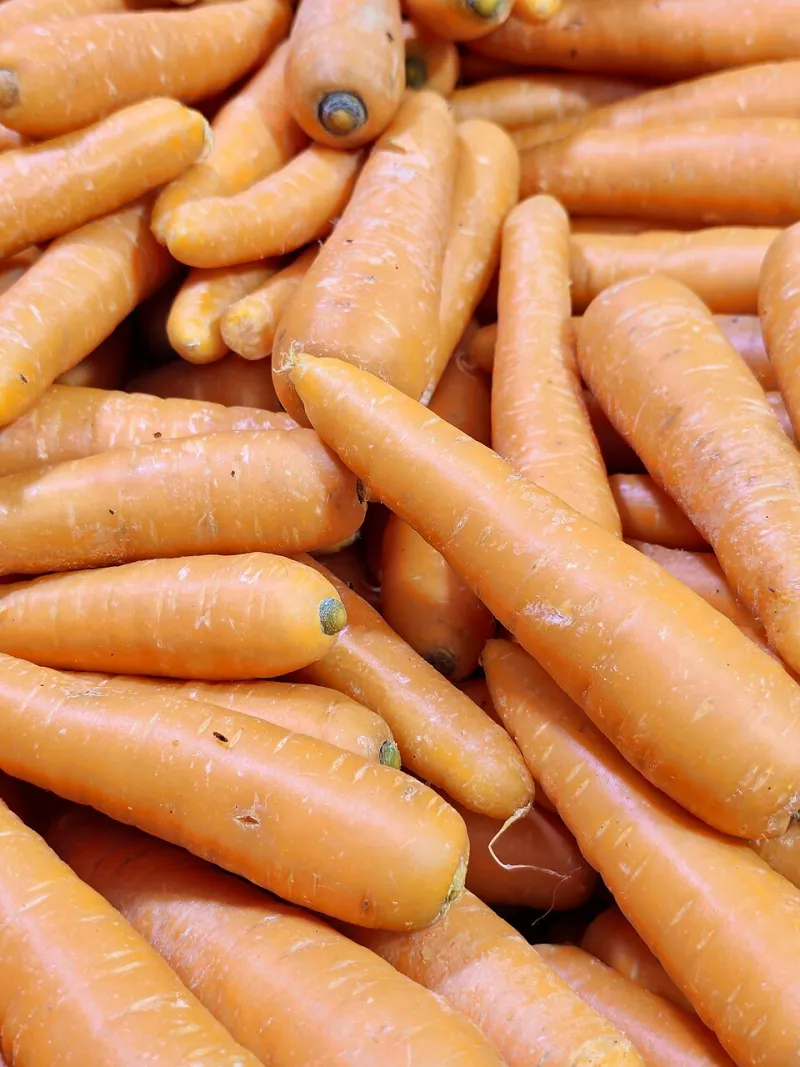
Photo: Mbigul, CC BY-SA 4.0, via Wikimedia Commons
Loose fruit and veg has a lovely, simple story attached to it: no film, no tray, no guilt. You drop a few carrots into your own bag, wheel them home and feel quietly virtuous. And sometimes that story is completely right. But the loose option is not automatically the low-waste option — or the cheaper one. In plenty of UK supermarkets, the naked carrot can cost more per kilo than its bagged neighbour, and it can start limping towards the compost bin sooner. So before we treat plastic-free produce as a straight swap, it is worth doing the sums properly.
The label tells only half the story
Supermarket shelves are designed to make the packaged version look like the obvious bargain. A 1kg bag of own-label carrots might sit at a friendly-looking price, while the loose ones are sold by weight and seem fiddly by comparison. The useful number is the unit price — the cost per kilo — usually printed in small type on the shelf edge. That is where the loose premium, when it exists, tends to show up.
It varies by store, season and crop. In some larger supermarkets, loose and packaged staples can be surprisingly close on price. In smaller convenience stores, the gap widens. And at a market stall or greengrocer, loose produce may beat the supermarket on quality, size and price — or cost a little more because someone has handled it carefully and not wrapped it in plastic. There is no single national rule here. The only reliable method is to compare the unit price on the day, in the shop you are actually standing in.
Why the naked carrot can cost more
There are practical reasons loose produce often carries a higher price tag. Packaging is not free, but neither is the labour of maintaining a loose display. Packaged produce can be weighed, sealed and shipped in predictable units. Loose produce needs bins, tongs, bags, labels and a certain amount of tidying up through the day. Shops also build more shrinkage into loose lines, because customers handle them, drop them and occasionally put them back in the wrong place.
The packaging itself is not always the villain we imagine, either. A thin plastic film can keep a cucumber firm for days longer than an unwrapped one. A tray and sleeve can protect soft fruit from being squashed in a delivery crate. That does not make all packaging worthwhile, and it certainly does not mean we should shrug at plastic. It does mean the comparison should include what happens after the shop, not just what happens at the till.
The spoilage tax
This is the bit that rarely makes it onto a price comparison. Loose produce often has a shorter life once it leaves the shop. A bagged carrot might last a fortnight in the fridge; a loose one may be a little older by the time you buy it, or simply dry out faster without the microclimate of a bag. If a third of your loose veg ends up in the food caddy, the true cost per edible carrot rises sharply.
That is the spoilage tax: the money, water, land and effort embedded in food you bought but did not eat. Food waste is a bigger environmental problem than most packaging decisions, and it is not solved by refusing film at the till. A plastic-free courgette that turns to mush in the drawer has not done the planet a favour. The low-waste shopper’s question is not “does this have plastic?” but “will this actually get eaten?”
The second-trip problem
There is another hidden cost: the extra journey. If loose produce is only available at a market, a greengrocer or a larger supermarket further away, you may end up making a separate trip. A bus fare, a parking charge or twenty minutes of your life all count. If that detour exists mainly to buy unwrapped carrots, the environmental case gets muddier. One short walk is one thing; a special drive across town for three parsnips is another.
This is where a little planning pays. If you are already passing the market, the loose option is an easy win. If you are making a dedicated journey, it may be better to buy packaged staples at the shop you were visiting anyway, and save the loose-produce run for a day when it fits naturally into your route.
When loose produce genuinely earns its place
Loose produce is at its best when it lets you buy the amount you actually need. If you live alone and a bag of six onions would rot before you get through them, two loose onions are the lower-waste choice even if they cost a few pence more per kilo. The same goes for herbs, chillies, apples and anything where a fixed pack is simply too big for your household.
It also wins when the quality is clearly better. A market carrot that is firm, sweet and likely to be eaten is a better buy than a slimy bagged one, whatever the unit price says. And loose produce earns its keep when you have a reliable routine: a greengrocer on the way home, a market on Saturday, a fridge that gets checked before shopping day. Convenience is not a dirty word in low-waste living. A system you can keep up is worth more than a perfect one you abandon after a fortnight.
A five-second test for the produce aisle
First, check the unit price, not the pack price. Second, ask whether you will realistically eat the whole amount before it turns. Third, look at the condition: is the loose produce fresh, or is it the last of the crate? Fourth, consider the journey — are you already here? And fifth, remember that packaging is only one part of the footprint. A slightly higher price for loose veg can be worth paying; a higher price plus wasted food plus a special trip is harder to defend.
The bottom line
Plastic-free produce is a useful tool, not a moral scoreboard. Loose carrots can be the better choice, the worse choice or simply the same choice in a different outfit. The low-waste basket is the one that gets eaten, bought with as little wasted travel as possible, and packed with whatever wrapping actually protects the food. Buy loose when it fits your quantities, your route and your fridge. Buy packaged when that is what keeps dinner on the table. The win is in the whole basket, not the single naked carrot.