Your Cup, Their Counter: A Reality Check on Bring-Your-Own Coffee in the UK
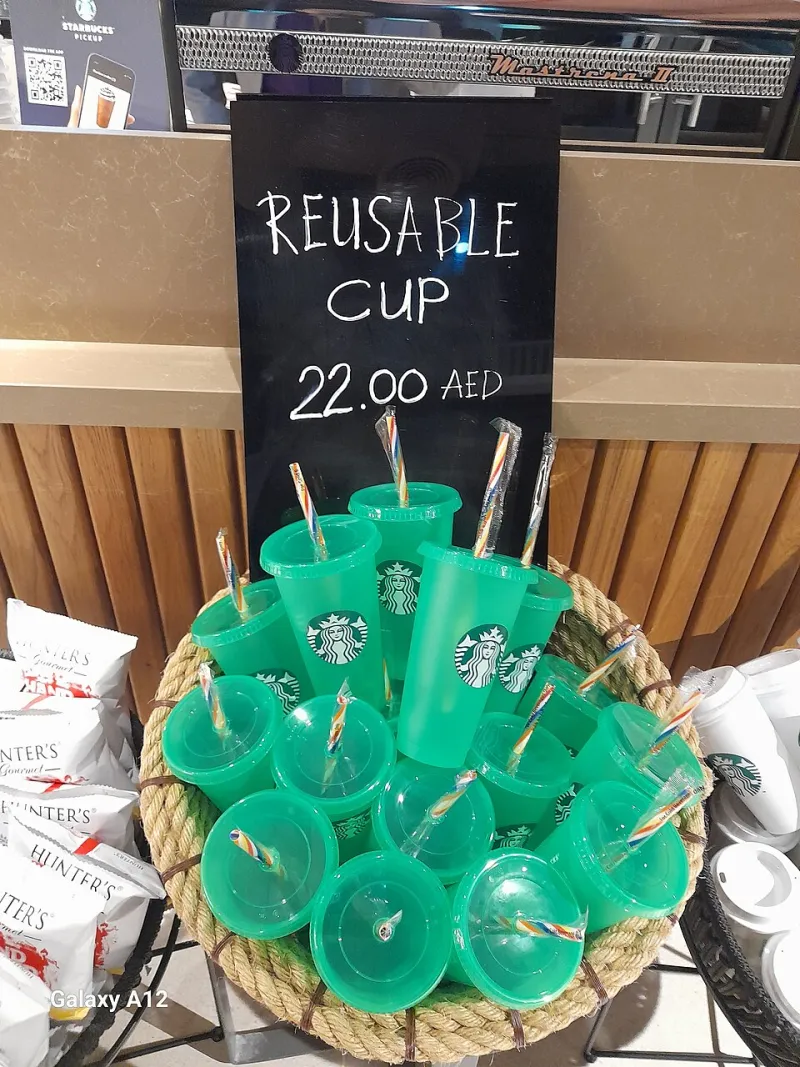
Photo: Challiyan, CC BY-SA 4.0, via Wikimedia Commons
The reusable cup is one of the few eco swaps that costs nothing extra if you already own one. You don’t need a new gadget, a subscription or a shelf of matching jars. You just need to remember it, carry it and hand it over at the counter. That last bit is where the habit meets the real British high street.
As of autumn 2026, most major coffee chains publish some kind of bring-your-own discount. The amounts are modest, usually somewhere between 25p and 50p, and the environmental case is obvious. But the discount is not the hard part. The hard part is the handover: the moment a barista has to take your slightly scuffed cup, work out what to do with it, and keep the queue moving.
The discount is easy; the handover is the test
A chain can advertise a reusable cup policy on its website and still have a branch where nobody knows how to apply it. That isn’t usually malice. It’s a till without a reusable-cup button, a new starter on their first solo shift, or a drive-thru window that wasn’t designed for a customer passing a mug through a car window.
At a staffed counter, the big high-street names are generally the safest bets. Pret, Costa, Starbucks and Caffè Nero have all had advertised reusable-cup discounts in recent years, and staff usually know the drill. Greggs and fast-food counters are more branch-dependent: some will fill your cup happily, some simply aren’t set up for it. Independent cafés are the wildcard, often in a good way, because the person making the coffee can also make the decision.
Counter service: usually yes, with a few caveats
Counter service is where BYO works best. You order, hand over a clean cup, and the barista either fills it directly or makes the drink in a jug and pours it in. Some machines and workflows don’t suit a random cup under the spout, so don’t be surprised if they use a jug or a paper cup to measure first. Ask them to make it in a jug if they can; it keeps the process tidy without wasting a cup.
Hygiene is the usual sticking point. UK food hygiene rules don’t ban reusable cups, but staff do need a cup that is clean and dry. A mug that has been rolling around in your bag since Tuesday is not a fair test of the system. If it smells of yesterday’s oat latte, rinse it before you leave the house. Some cafés will ask you to remove the lid, some won’t touch a lid at all, and some will only fill cups that are visibly clean. None of that is unreasonable.
Drive-thru and app orders: the weak spots
Drive-thru is where reusable cups go to die. The window workflow is built for handing drinks out, not taking cups in. Some chains will accept a reusable cup at the window if you ask and the branch has a jug handy, but many won’t. It isn’t a conspiracy; it’s a queue of cars and a till screen that doesn’t have a button for your mug. If BYO matters to you, park and walk in.
App orders are similar. If you order ahead, the drink is often made before you arrive, which means there is no cup to fill. Some apps let you add a note, but a note is not a policy. Use the app for convenience if you like, but don’t expect it to support the reusable habit. The counter is still the place where the swap actually happens.
Sizes, lids and the small print
Your cup may not match the chain’s sizes. A 12oz cup is not a universal language, and a barista filling to their own line may give you less than you expected if your cup is smaller. If your cup is bigger, they may fill it to the chain’s standard size rather than to the brim. That’s normal. Ask before you order if you’re particular about volume.
Lids are another friction point. Don’t assume a chain lid will fit your cup, because it probably won’t. Bring your own lid if you need one, and accept that some staff won’t handle a reusable lid for hygiene reasons. A clean cup with no lid is often the easiest handover of all.
What to say when the answer is no
Keep it short: “I’ve got my own cup — is that okay? Could you make it in this and apply the reusable discount?” If the answer is no, don’t argue with the person on the till. They are not the policy department. Take the drink in the chain’s cup this time, then send a quick note to head office or fill in the contact form. A branch that gets repeated feedback is more likely to train staff than a customer who holds up the queue.
If you’re refused at a drive-thru, don’t take it personally. The system isn’t built for it yet. If you’re refused at a counter, ask whether it’s a branch rule or a till problem. Sometimes a supervisor can sort it in ten seconds. Sometimes the answer is genuinely no.
The habit survives on small wins
The reusable cup doesn’t need another eco-friendly cup to go with it. It needs a till button, a trained barista and a customer who isn’t too precious about the odd refusal. If your local does it well, tell them. If they don’t, tell head office. Then keep the cup by the door, because the swap only works when it becomes the default rather than the special request.