The Fifth-Floor Compost Bin: Decoding ‘Home Compostable’ Packaging Without a Garden
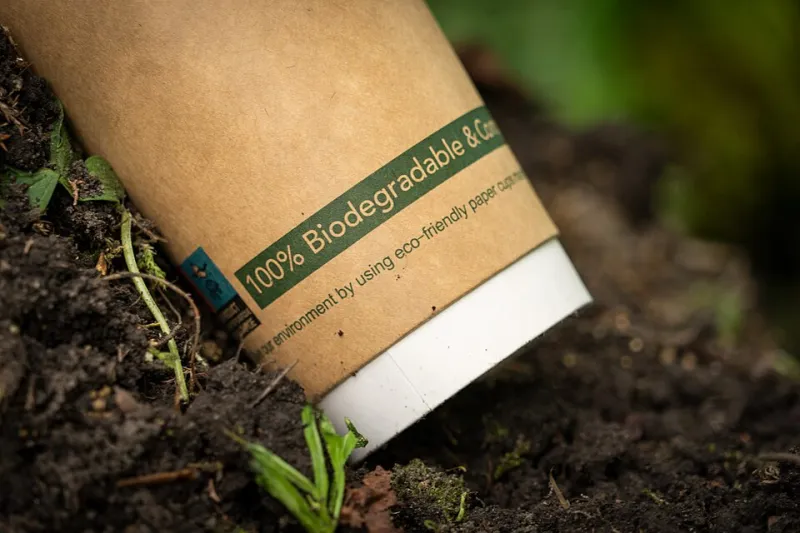
Photo: Meanwell Packaging, CC BY 2.0, via Wikimedia Commons
A padded mailer lands on the doormat. On the back, in hopeful green type: ‘Home compostable.’ You live on the fifth floor, your ‘garden’ is a windowsill basil plant, and the bin store downstairs has one general waste chute and a recycling bin that already smells faintly of last week’s milk. What exactly are you meant to do with it?
That’s not a silly question. It’s the question the packaging industry has been slightly hoping you won’t ask too loudly.
The label is not a disposal instruction
‘Compostable’ sounds like a promise that the material will disappear if you leave it near some soil and good intentions. In reality, compostable packaging is designed to break down under specific conditions — and those conditions vary enormously.
Most ‘industrially compostable’ items are certified to standards such as EN 13432. That means they need the sustained heat and controlled environment of a commercial composting facility. Your council’s food waste caddy is not that facility, and neither is a heap at the end of an allotment.
‘Home compostable’ is a different claim. It usually means the item can break down in a well-managed home compost heap, typically certified to standards such as TÜV OK compost HOME or AS 5810. Even then, ‘can’ is doing a lot of work. A home compost heap needs the right mix of greens and browns, moisture, air and time. A compostable mailer dropped into a cold, soggy corner of a garden isn’t guaranteed to vanish on schedule.
And none of this means ‘recyclable’. Compostable plastics can contaminate dry mixed recycling, so they should never go in your kerbside recycling bin unless your council explicitly says otherwise.
What UK kerbsides actually accept
This is where the flat-dweller’s optimism tends to meet the council’s A–Z recycling guide.
Most UK councils accept food waste in a separate collection, but they usually want food only — not compostable bags, cups, cutlery or packaging. Some garden waste collections refuse compostable packaging too, because it can slow down the composting process or fail to break down in the timescale the site uses.
A handful of councils and pilot schemes have trialled compostable packaging in food waste collections, but it is far from universal. The practical rule is simple: check your own council’s waste A–Z before you buy a cupboard full of ‘compostable’ caddies. If the answer isn’t clearly yes, assume no.
If you have no food waste collection and no garden, the honest destination for most compostable packaging is general waste. That’s not a moral failure on your part. It’s a sign that the material’s end-of-life route hasn’t caught up with the marketing.
Realistic routes for renters and flat-dwellers
A small balcony or windowsill doesn’t rule out composting entirely, but it does change what’s sensible. A wormery or bokashi bin can handle some kitchen scraps, though neither is a reliable home for compostable packaging. Bokashi ferments rather than composts, and wormeries work best with soft fruit and vegetable scraps, not chunky mailers.
Community composting is often the better bet. Allotment associations, community gardens, school growing projects and some farmers’ markets run drop-off schemes. They may accept kitchen scraps, garden waste or both — but ask first, and don’t assume they’ll take packaging. A quick email to a local growing group is worth more than a vague hope.
Some workplaces, cafés and co-working spaces have food waste collections or composting arrangements. If you’re in the office five days a week, it’s worth asking whether there’s a route for compostable items. Again, check before you smuggle a week’s worth of coffee cups into the office kitchen.
There are also specialist drop-off and take-back schemes, but they tend to be small, scattered and specific to certain brands. Treat them as a bonus, not the foundation of your waste strategy.
A buying hierarchy for people without a garden
If you want to avoid treating optimistic packaging claims as a waste plan, buy in this order:
- Skip the packaging altogether. Loose fruit and veg, refillable toiletries, solid shampoo bars, a reusable coffee cup and a bread bag will always beat a compostable version of a single-use item.
- Choose refill and reuse where it exists. A container you wash and refill is not relying on a composting facility that may never see it.
- Choose widely recyclable packaging you can actually recycle. Paper, card, metal and glass are not perfect, but they have established kerbside routes in most areas. Check locally rather than assuming.
- Choose compostable packaging only if you have a confirmed route. That means a home compost system that genuinely handles it, a community scheme that accepts it, or a council collection that explicitly allows it.
- Treat ‘home compostable’ as a bonus, not a reason to buy. If you weren’t going to buy the item anyway, the compostable label doesn’t make it a greener choice. It just makes the bin decision more confusing.
Three questions before checkout
Before you add a compostable mailer, cup or food bag to your basket, ask:
- Will my council take it? Check the A–Z on your council’s website. If it’s not listed, don’t gamble.
- Do I have a real composting route? A windowsill herb pot is lovely, but it isn’t a composting facility. Be honest about what your setup can handle.
- Could I avoid it entirely? A reusable alternative, a refill or a product with paper-based packaging may be the simpler win.
The bigger picture
Compostable packaging isn’t pointless. In closed-loop settings — festivals with industrial composting, events with dedicated waste streams, or businesses that control the whole disposal chain — it can make sense. But it isn’t a universal solution, and it shouldn’t displace the first rule of zero waste: use less in the first place.
As shoppers, we can push for clearer labels and better collection routes by asking retailers and councils direct questions. In the meantime, a flat-dweller with a compostable mailer and no garden is not the problem. The problem is a system that sold the packaging before it built the bin route.
So the next time a ‘home compostable’ label catches your eye, read it as a question, not an answer: where, exactly, is this going to go? If you can’t picture the route, don’t let the label do the thinking for you.